
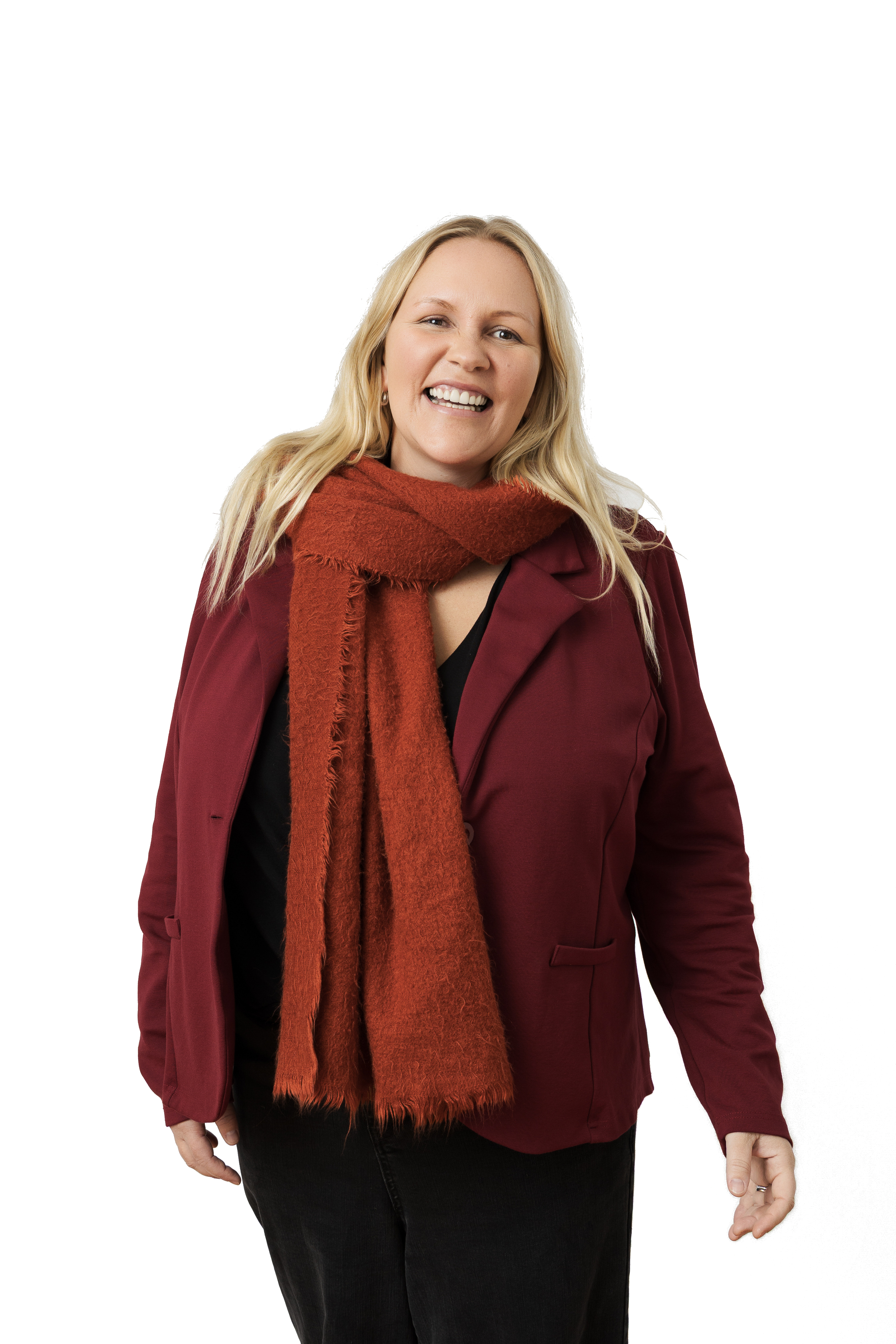
Occupational therapist. Systems thinker. Founder of The PassionpilOT Company.
ABOUT

CLINICAL SERVICES
Our Therapeutic Approach
Please note PassionpilOT books are currently closed for new clients until September 2026.
PassionpilOT takes a rights-based approach to consider how power dynamics
between children and grown-ups influence children’s responses and decision
making. At all stages of the therapeutic process, PassionpilOT prioritises
empowering young people to understand their own bodies, and identify and express their needs in, and beyond, therapy.
PassionpilOT acknowledges, with humility, the skills and expertise caregivers have
in observing and understanding their child. This therapy service does not preference
the expertise of credentialed experts above those who know and love a young
person, and seeks to meaningfully engage with families at all stages of the
therapeutic process.
In delivering therapy, the Occupational Therapist will also recognise that even a child
described as having limited insight can have surprisingly helpful insights into the
solutions to a challenge. The PassionpilOT therapy process supports young people
to explore solutions that “stick” for them, and to build the skills to identify new
solutions to challenges as they arise in the places they want and need to be.
PassionpilOT’s therapy service is designed to be responsive to the needs and skills of all those who are important to a child and their developmental goals.
This can include a treating team of therapists, but may also include educators, extended family, babysitters, support workers, friends, and neighbours.
Therapy services are built to fit within what is realistic for families in any given week, and are flexible to the changes and seasons of family life and childhood.
PassionpilOT services also acknowledge what is practical to progress in a home environment, and that the most important role for all those in a child’s ecosystem is to love and delight in the child.
PassionpilOT’s therapy services are heavily influenced by the research of Dr Ross
Greene and Dr Mona Delahooke on child behaviour, and are built on the
underpinning value that young people do well when they can. The therapist will
support the detective work involved in understanding the nature of skills a child may
not yet have acquired, and support young people and their families to make
necessary accommodations and build the skills they need to improve their
experience of the world.
Play is not a break from learning — it is the mechanism of it. Children engage most
deeply, build skills most durably, and tolerate challenge most willingly when the work
is grounded in what genuinely delights them.
A child’s passionate interest in Taylor Swift, Minecraft, trains, or the precise
aerodynamics of paper planes is not a distraction from therapy. It is the starting
point. The therapist’s job is to understand what lights a young person up — and meet
them there.
This is not merely a motivational strategy. Curiosity, pleasure, and intrinsic
motivation create the neurological conditions in which new skills are most readily
acquired and retained. Joy is not a reward for hard work. It is the mechanism by which hard work becomes possible.
PassionpilOT therapy is designed to be something a child wants to come back to.
TRAINING
A seven-episode therapeutic program for families of children with disability.
Designed to be recommended by clinicians as part of a family’s care.
THE SEVEN EPISODES
-
Understanding the gap between how a system presents itself and how it actually operates.
Mapping who holds power in your situation — and who you actually need to influence.
Gathering and triangulating evidence about what is really happening — without it costing more than you have.
Understanding your own nervous system and what advocacy costs you, before you walk into a hard situation.
Assessing your family’s capacity honestly and making strategic decisions about when to act, wait, or delegate.
Locating what is already working in your community — and learning from the families who figured something out.
Bringing everything together into a strategic plan you can actually fly with — and update as conditions change.
PROGRAMS
Self-paced program
Everything you need to navigate the systems around your child — at your own pace, in your own time, wherever you are in the world.
What’s included:
- All seven episodes — approximately 90–100 minutes of video content
- The Your Flight Path participant workbook — downloadable PDF
- Lifetime access — return to any episode as your situation changes
- No live sessions or scheduled elements — work at the pace your fuel gauge allows
Individualised coaching program
For families who want to work through the Your Flight Path tools one-to-one with Amie — applying the frameworks directly to their specific child, system, and situation.
What’s included:
- Everything in the self-paced program
- A series of individualised coaching sessions with Amie
- Direct application of the Your Flight Path tools to your family’s specific situation
- Tailored strategic planning for the systems you are actually navigating
- Suitable for families who wish to explore NDIS funding for capacity building supports — see FAQ for details
FREQUENTLY ASKED QUESTIONS
Section 1 — Is this for me?
Q1 Who is Your Flight Path designed for?
Your Flight Path is designed for any family navigating systems on behalf of a child who has
disability, neurodivergence, or complex health needs. This includes families navigating school
inclusion, NDIS planning and reviews, sporting and community participation, allied health
services, and other institutions that shape their child’s daily life. It is particularly useful for
families who feel overwhelmed by the complexity of the systems around their child, unsure
where to direct their energy, or exhausted from advocacy that isn’t producing results.
Q2 My child has a diagnosis but we aren’t on the NDIS. Is this still relevant?
Yes. Your Flight Path is not an NDIS navigation tool — it is a systems navigation tool. The skills
and frameworks it teaches are relevant to any family navigating any institution on behalf of a
child: schools, sporting clubs, community organisations, medical systems, and more. Families
do not need to be connected to the NDIS for this program to be useful.
Q3 My child is neurodivergent but does not have a formal diagnosis. Is this program
for us?
Yes. Your Flight Path does not require a formal diagnosis and is not structured around
diagnostic categories. It is designed for families who are navigating systems that weren’t built
for their child — whatever the reason. If that resonates with your family’s experience, the
program is likely to be useful.
Q4 I’m a foster carer or kinship carer. Is this relevant to me?
Yes. The program is explicitly designed with foster and kinship carers in mind. Families in out-
of-home care often navigate particularly complex systems, sometimes with limited information
about a child’s history or needs, and with additional layers of institutional involvement. The tools
in Your Flight Path are applicable to these contexts.
Q5 I live in a rural or remote area. Will this program work for me?
Yes. Your Flight Path is delivered entirely online and is designed to be accessible regardless of
location. It has been developed with rural and remote families in mind, and does not assume
access to a wide range of local services. Several episodes specifically address situations where
services are stretched or unavailable, including how to find what is already working locally and
how to make strategic decisions when options are limited.
Q6 I’m an allied health clinician, not a family member. Is this relevant to me?
Yes — in two ways. First, the program is designed to be recommended by clinicians as a
supplementary resource for the families they support. Many allied health professionals find it
useful to understand the framework so they can refer families with confidence. Second, a
Clinician’s Companion resource is planned as an optional addition to the program — providing
guidance on how to use the Your Flight Path framework within clinical practice. Details will be
available at launch.
Section 2 — What is this program?
Q7 Is Your Flight Path therapy?
Your Flight Path is therapeutic in its approach and is grounded in occupational therapy theory and evidence. However, it does not constitute individual occupational therapy assessment or treatment, and it does not establish a therapeutic relationship between the program creator and participants.
The program is an online therapeutic education resource — designed to
complement, not replace, the work families do with their own occupational therapists and allied health clinicians. Families are encouraged to share the program with their existing care team.
Q8 What does the program cover — and what does it not cover?
Your Flight Path gives families practical tools to understand and navigate the systems, institutions, and people that shape their child’s participation in daily life. Specifically, it covers:
• How to read the gap between how a system presents itself and how it actually operates
• How to map who holds power in a situation and how to direct energy strategically
• How to gather and triangulate evidence about what is really happening
• How to understand your own nervous system and what advocacy costs you
• How to assess your family’s capacity and make strategic decisions about timing
• How to find what is already working in your local community
• How to build a strategic plan and update it as conditions change
The program does not cover: how legislation is made or how federal and state governments
divide responsibility; legal rights or formal complaints processes; disability advocacy in a formal
or legal sense; clinical assessment or diagnosis; or advice specific to any individual family’s
situation.
Q9 Is this a program about politics or government policy?
No. Your Flight Path is not a program about how government works, how legislation passes
parliament, or the difference between federal and state responsibilities. It does not engage with
macro-level political analysis. It is a practical program about how families can navigate the
specific systems, institutions, and people that affect their child’s daily life — at the level of a
school, a sporting club, a funding body, or a community organisation. The analytical tools it
provides are interpersonal and institutional, not political.
Q10 Is this a legal rights or disability advocacy program?
No. Your Flight Path does not provide legal advice and does not constitute formal disability
advocacy. It does not cover complaint mechanisms, appeals processes, or legal rights in any
specific detail. Families seeking formal advocacy support are encouraged to contact their state
or territory disability advocacy service, or the National Disability Advocacy Program. Your Flight
Path works at the interpersonal and community level, alongside — not instead of — formal
advocacy services.
Q11 How is this different from other resources for families of children with disability?
Most resources for families of children with disability focus on one of three things: what the child needs clinically, what rights and entitlements the family has, or how to manage stress and avoid burnout. Your Flight Path focuses on a gap none of those address: the practical analytical skills families need to understand and navigate the systems around their child. How to read power.How to find leverage. How to direct limited energy strategically. How to learn from what is already working nearby. These are the tools that professionals in policy, community development, and systems change use every day — and that families have rarely had access to in an accessible, affordable format.
Section 3 — Format and access
Q12 How is the program delivered?
Your Flight Path is a self-paced online program. It includes:
• Seven video episodes, approximately 13–15 minutes each
• A downloadable participant workbook with structured tools for each episode
• Access via a secure online platform on any device
• No live sessions or scheduled elements — families work at their own pace
Once enrolled, families have ongoing access to all episodes and materials. There is no time
limit on completion.
Q13 How long will the program take to complete?
The seven episodes total approximately 90–100 minutes of video content. Workbook activities
vary in time depending on how deeply families engage with them. The program is designed for
busy, often exhausted families. There is no required pace — families can complete one episode
at a time, return to episodes as their situation changes, and use the workbook tools as ongoing
references rather than one-off activities. Most families spread the program across several
weeks.
Q14 Do I need any prior knowledge or background to do this program?
No. Your Flight Path has been designed for all families, regardless of educational background,
prior experience with disability systems, or familiarity with advocacy. All content uses plain,
accessible language. Terms that carry technical or political meanings have been translated into
everyday language throughout. The program has also been designed with neurodivergent
families in mind — instructions are concrete and step-by-step, emotional content is named
directly rather than implied, and visual tools are clearly structured.
Section 4 — NDIS and funding
Q15 Can I use my NDIS funding to pay for Your Flight Path?
The PassionpilOT Company is not able to provide advice about individual NDIS plans or funding
eligibility. Families are encouraged to speak with their NDIS planner, Local Area Coordinator
(LAC), or Support Coordinator to explore whether Your Flight Path may be appropriate to
include in their plan.
Q16 Is The PassionpilOT Company a registered NDIS provider?
The PassionpilOT Company is not currently a registered NDIS provider.
Section 5 — Disclaimers and safety
Q17 Does completing Your Flight Path mean I don’t need an occupational therapist?
No. Your Flight Path is designed to complement the work families do with their occupational
therapists and other allied health clinicians — not to replace it. Individual occupational therapy
provides something this program cannot: a clinician who knows your specific child, can conduct
a proper assessment, and can tailor recommendations to your family’s unique circumstances.
Your Flight Path provides general frameworks and tools. Your OT provides the individualised
clinical judgment. Families are encouraged to share the program with their OT and use it
alongside their existing care.
Q18 What if the program raises something difficult for me or my family?
Some of the content in Your Flight Path — particularly episodes on nervous system awareness,
family capacity, and the emotional cost of sustained advocacy — may bring up difficult feelings
or experiences. A list of Australian support services is included in the participant workbook and
is available on this website. If anything in the program stirs up something that needs more
support than an online program can offer, please reach out to a mental health professional, your
GP, or a support service in your community. Families outside Australia are encouraged to
contact their local mental health or carer support services.
Section 6 — About the program
Q19 What is the evidence base for this program?
Your Flight Path draws on seven well-established bodies of knowledge, each translated into
plain language throughout the program. These include: Occupational therapy foundational
frameworks (Person-Environment-Occupation Model; Person-Environment-Occupation-
Performance Model; Canadian Model of Occupational Performance and Engagement; Ecology
of Human Performance); polyvagal theory and nervous system science; energy management
and pacing research including the most recent Long COVID evidence; social determinants of
health; structural competency; positive deviance; and systems and power analysis from
international development. A full reference list is included in the participant workbook and is
available on request. All concepts have been translated into plain language — families do not
need any background in these fields to engage with the program.
BLOG

Fit In or F@#$ Off! Social Skills, Civic Life, and the Children We’re Leaving Behind By Amie Milligan, Occupational Therapist | PassionpilOT Abstract This piece argues that the public normalisation of contempt for difference — visible everywhere from political rhetoric to a stranger’s t-shirt — is not separate from the work of supporting neurodivergent children