This piece argues that movement, like singing, is a behaviour humans evolved to need, and that contemporary culture has stripped both from everyday life, replacing intrinsic joy with performance-based participation across nearly every entry point to movement, including sport, dance, and therapeutic practice. Drawing on evolutionary biology, self-determination theory, disability and weight stigma research, and developmental stress science, the piece contends that children who move differently bear the greatest cost of this shift, and that addressing it requires moving away from performance-based models toward approaches that prioritise nervous system safety and bodily autonomy. It concludes by inviting interest from families, therapists, and educators in an alternative, joy-centred approach to movement.
“I can’t sing.” It’s such a common thing to hear that nobody questions it. But it’s a strange thing to say about a behaviour that shows up in every documented human culture, that infants respond to before they can speak, and that researchers like Robin Dunbar, Ian Cross and Steven Mithen argue may have evolved specifically because it bonds groups of people together. One recent study of hunter-gatherer women in the Republic of Congo found their singing wasn’t really about warding off predators at all; it tracked most closely with carrying an infant while foraging. Humans also appear to be unusual among singing species in our capacity for tightly synchronised group singing and dancing — something researchers Steven Brown and Joseph Jordania have pointed to as a genuine evolutionary puzzle. Whatever its precise origin, something this old, this universal, and this tied to connection didn’t survive this long by accident.
Movement is the same story, told slightly differently. Harvard evolutionary biologist Daniel Lieberman has spent his career studying it, and his conclusion is almost the opposite of what we’d expect: humans didn’t evolve to exercise. We evolved to conserve energy wherever possible, and to move only when it was necessary, social, or rewarding — walking to find food, playing, dancing, working alongside other people. Movement as a discrete, measurable, optimisable activity you do for health is a very recent invention, and our bodies still resist it. What we did evolve for was movement embedded in life — in relationship, in necessity, in joy.
Here’s what’s been sitting with me. We’ve built a culture — Anglo culture especially — where both of these ancient, embodied, relational behaviours have been stripped out of ordinary life and handed over to specialists. Singing belongs to singers. Movement belongs to athletes. Everyone else learns, early and thoroughly, to sit it out. And when something our nervous system actually needs gets removed from everyday life like that, we don’t just lose a nice-to-have. We lose a layer of safety for the children we’re raising and caring for.
“Her body isn’t the right shape for our team”
I still remember a regional hockey carnival, years ago, hearing a state coach tell someone on the bench, loudly enough that I’d catch it, that I was a good player but the wrong shape for the team. I was good enough most seasons to be picked for best and fairest. I wasn’t good enough, it turned out, to be selected for state. No child should have to hear a verdict like that about their own body and take it as simple fact rather than the cruelty it actually is. The children I work with now hear some version of that sentence on repeat, in a thousand different activities, not always in words but in who gets chosen, who gets corrected, who gets quietly left behind at training while everyone else moves on to the next drill. For me, it cost a selection. For so many of them, it costs the whole game.
We focus so much on being good at it, when our actual job should be helping children find joy in it.
When “good at it” replaces “joy in it”
Self-determination theory offers a useful explanation for why this happens so reliably. Decades of sport psychology research, including a well-known study that followed nearly 500 adolescent soccer players over a season, link dropout to three specific things going unmet: a sense of autonomy, a sense of competence, and a sense of belonging. Where coaches are autonomy-supportive — where kids have some real ownership over how they participate — motivation and engagement rise, regardless of age, gender, or skill level. We have, in other words, solid evidence that movement sticks when it feels self-directed and connected, and falls away when it’s organised around ranking, correcting, or measuring a child against everyone else.
That’s the performative culture I want to name. It isn’t only elite sport. It’s the school athletics carnival, the dance recital, the best and fairest, the parent on the sideline silently doing the maths on who’s ahead. We’ve built almost every entry point to movement around demonstrating competence rather than feeling joy, and then we wonder why so many children quietly opt out.
What that means for little bodies who move differently
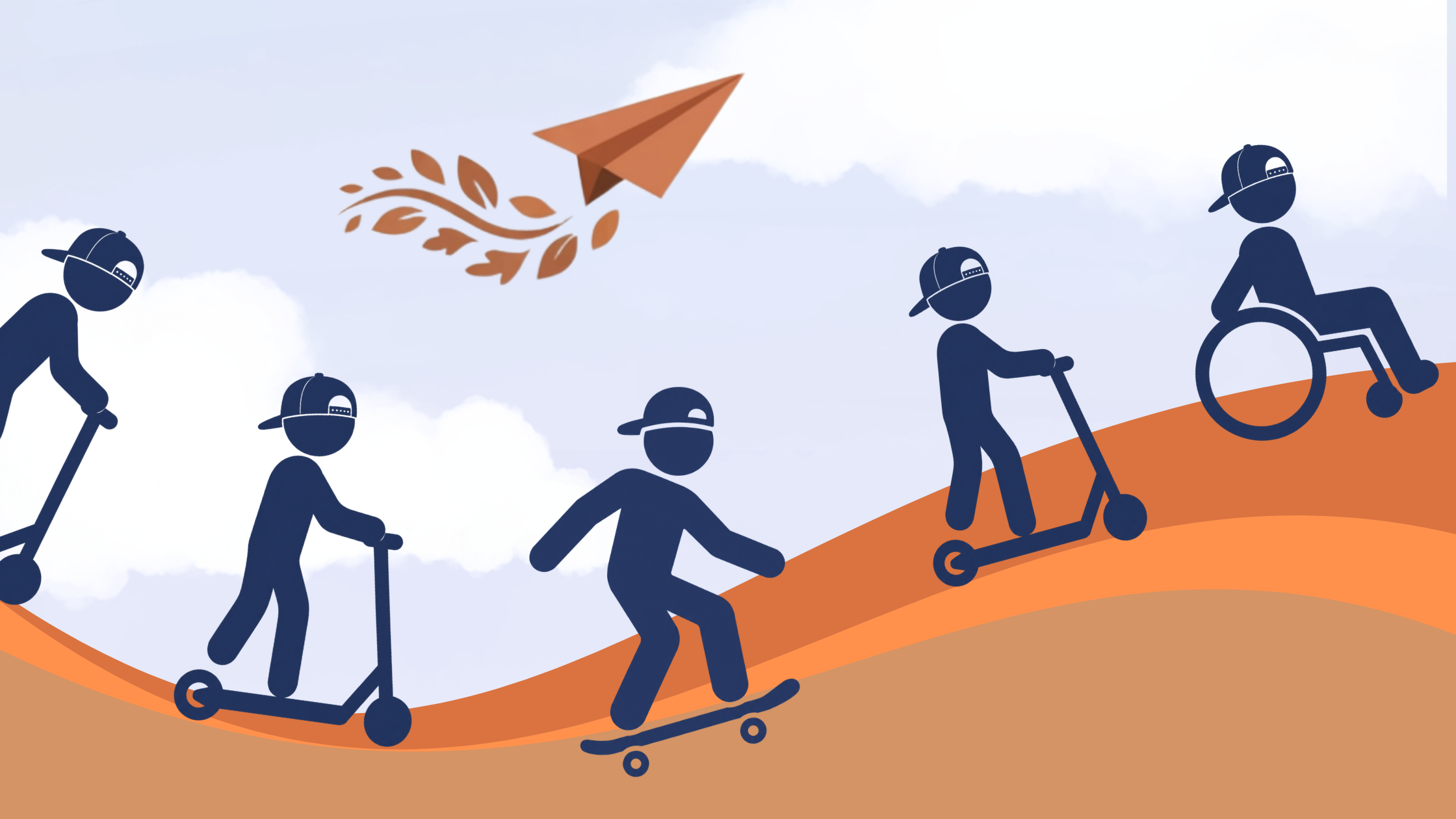
For children who move differently — through low muscle tone, motor planning differences, sensory differences, or disability — a performative culture isn’t just unhelpful. It’s actively exclusionary, in ways that are well documented. Australian research out of La Trobe University, drawing on focus groups with children with disability, their parents, and sport and recreation staff, found these children take part in markedly less physical activity than their peers — and the barriers are rarely about the child’s body alone. Negative attitudes, inadequate facilities, a lack of skilled and willing instructors, and a chronic emphasis on competition over inclusion in PE classes all show up as concrete, fixable reasons children stop participating. Children with disability are also more likely to be confined to solitary play, partly because playgrounds simply aren’t built for their bodies, and partly because overprotective adult attitudes treat them as fragile rather than competent — even though free, somewhat risky play matters more for these children’s development, not less.
This tracks with what I see constantly in dance classes, in sport, even inside well-meaning therapy spaces — not because the people running them don’t care, but because we don’t yet have much of a cultural template for movement that’s built around joy rather than performance. So even the best, most well-intentioned instructors are often working from the only model most of us were ever taught: routines that demand sustained attention a child’s brain can’t currently sustain, instructions to jump up when a body feels heavy or a limb won’t reliably answer the brain’s instruction to move, a quiet but constant pressure to keep up rather than an invitation to move at your own rhythm. Even disability spaces, built specifically to be inclusive, can stay bound by that same performance lens — measuring what we can do, how fast, how high, how long, how improved since last term — simply because nobody’s handed us a different template yet. And on the playground, the default fix is almost always aimed at the child who’s behind, teaching them to run faster, rather than at the game itself, or at the children racing ahead, who are rarely taught to turn around and check on who’s still with them.
When a parent’s own body is in the room too
There’s a piece of this that’s harder to talk about, and just as well evidenced: when parents watch their children move differently, it often surfaces something of their own. Research on weight stigma consistently shows that people who’ve experienced teasing or stigma about their bodies are significantly more likely to avoid physical activity altogether — not because they dislike movement, but because movement spaces have taught them they don’t belong in them. That dynamic was on full display when athletes at the Paris 2024 Olympics were publicly mocked for their body size, despite being among the very best in the world at their sport. And there’s now solid evidence that this gets passed down: a 2025 study following 634 mothers found that the way their own parents talked about weight and shape in childhood predicted, decades later, how they talk about weight and shape with their own children. If movement was where a parent’s body was once made to feel wrong, it makes sense that movement is where the flinch shows up again — quietly, unintentionally, even when they love the child in front of them more than anything. And when a parent’s body stops moving in front of a child, the child often learns to stop too.
Movement as nervous system safety, not performance
This is where I think the therapeutic frame needs to shift. There’s deep, well-established developmental science behind this idea, even without leaning on more contested frameworks. Researchers at Harvard’s Center on the Developing Child distinguish between positive stress, which is brief and even useful for growth, tolerable stress, and toxic stress: prolonged activation of a child’s stress response system without enough buffering from a safe relationship or environment. The evidence here is consistent — when that buffering is missing, the disruption shows up in the brain architecture that supports learning, attention, and emotional regulation. The same body of research shows that a child’s stress response can be co-regulated by a safe relationship and a safe environment, well before they’re able to manage it alone. A nervous system that’s busy managing stress isn’t available for learning, connection, or joy.
Movement can be one of the most powerful tools we have for building that felt sense of safety. But only if the movement itself isn’t what’s keeping the stress response switched on. A child whose body has repeatedly been corrected, ranked, or found wanting in movement spaces isn’t being difficult when they avoid it — their body has accurately learned that movement is somewhere their safety isn’t guaranteed. And when the very thing that could help regulate them becomes a trigger instead, both their nervous system and their mental health lose access to one of its best tools.
If you follow the prescriptive and participate in the performative, the joy and the health benefits of movement get stolen from exactly the children who need them most.
Outcomes, not outputs
Letting go of measurement doesn’t mean letting go of results. A systematic review of physical activity research found that intrinsic motivation, movement chosen because it’s genuinely enjoyable, is the strongest predictor of whether someone keeps moving long-term, more reliable than motivation built around obligation, appearance, or even health itself. And a meta-analysis of health interventions built around autonomy and psychological need support found measurable improvements in physical and psychological health that were still present at follow-up, well after the intervention had ended. Movement chosen for its own sake doesn’t just feel better in the moment. It’s the version that lasts, and lasting is where health benefits actually accumulate.
There’s a useful precedent for this inside paediatric rehabilitation itself. In 2012, researchers at Canada’s CanChild Centre published an influential reframing of childhood disability built around six “F-words”: function, family, fitness, fun, friends, and future. Their argument was that the field had spent too long measuring outputs, joint range of motion, repetitions, how a limb moves in isolation, while losing sight of the outcomes that actually make up a life: whether a child has friends, feels part of a family, is building toward a future they want. Those two things sit at completely different levels, and only one of them is what a child actually experiences. A child who feels safe enough in their body to move because they want to gets the strength, the motor practice, and the regulation as a byproduct of simply wanting to be there. Keep our eyes only on the limb, and we’ll keep missing the life it’s meant to carry the child through.
What I think we need to build instead
What I want to put forward — and what I’d genuinely love to know if it lands for other people too — is a different premise entirely. Movement for children who move differently shouldn’t be measurable. Not against a routine, not against a peer, not even against last week’s version of themselves. The job isn’t to make a child’s movement look more typical. It’s to help them feel safe enough in their own body to seek movement out, again and again, simply because it feels good to be a body that moves — not because they’ve been taught it’s something to get right.
That’s the territory I’ve been working in, and I’m genuinely curious how widely this resonates. If this is something you’d want for your own family, or for the children you support as a therapist or educator, I’d love to hear from you.
References
Alberga, A. S., Nagpal, T. S., & Patton, I. (2025). A call for weight stigma reduction in physical activity, exercise, and sport settings. Journal of Physical Activity and Health, 22(8), 875–878.
American College of Sports Medicine. (2025). Why we must prioritize equitable access to physical activity for children with disabilities. acsm.org.
Amorose, A. J., & Anderson-Butcher, D. (2007). Autonomy-supportive coaching and self-determined motivation in high school and college athletes: A test of self-determination theory. Psychology of Sport and Exercise, 8(5), 654–670.
Bevan, N., O’Brien, K. S., Latner, J. D., Lin, C.-Y., Vandenberg, B., Jeanes, R., & Fung, X. C. C. (2022). Weight stigma and avoidance of physical activity and sport: Development of a scale and establishment of correlates. International Journal of Environmental Research and Public Health, 19(23), 16370.
Brown, S., & Jordania, J. (2013). Universals in the world’s musics. Psychology of Music, 41(2), 229–248.
Center on the Developing Child, Harvard University. (2014). Excessive stress disrupts the architecture of the developing brain (Working Paper No. 3, updated edition).
Chittar, C. R., Jang, H., Samuni, L., Lewis, J., Honing, H., van Loon, E. E., & Janmaat, K. R. L. (2023). Music production and its role in coalition signaling during foraging contexts in a hunter-gatherer society. Frontiers in Psychology, 14, 1218394.
Dunbar, R. I. M. (2012). On the evolutionary function of song and dance. In N. Bannan (Ed.), Music, Language, and Human Evolution (pp. 201–214). Oxford University Press.
Enlow, M. B., King, L., Schreier, H. M., Howard, J. M., Rosenfield, D., Ritz, T., et al. (2014). Maternal sensitivity and infant autonomic and endocrine stress responses. Early Human Development, 90(7), 377–385.
Ferrer, E., Marhan, S., Haller, L., & O’Connor, S. M. (2025). Parent to child intergenerational transmission of direct and indirect weight and shape communication. Journal of Child and Family Studies.
García Calvo, T., Cervelló, E., Jiménez, R., Iglesias, D., & Moreno, J. A. (2010). Using self-determination theory to explain sport persistence and dropout in adolescent athletes. The Spanish Journal of Psychology, 13(2), 677–684.
Leongómez, J. D., Havlíček, J., & Roberts, S. C. (2022). Musicality in human vocal communication: An evolutionary perspective. Philosophical Transactions of the Royal Society B, 377(1841), 20200391.
Lieberman, D. E. (2021). Exercised: Why Something We Never Evolved to Do Is Healthy and Rewarding. Pantheon Books.
Ntoumanis, N., Ng, J. Y. Y., Prestwich, A., Quested, E., Hancox, J. E., Thøgersen-Ntoumani, C., et al. (2021). A meta-analysis of self-determination theory-informed intervention studies in the health domain: Effects on motivation, health behavior, physical, and psychological health. Health Psychology Review, 15(2), 214–244.
Physiopedia. Inclusion of children with disabilities in free risky play. physio-pedia.com.
Rosenbaum, P., & Gorter, J. W. (2012). The ‘F-words’ in childhood disability: I swear this is how we should think! Child: Care, Health and Development, 38(4), 457–463.
Shields, N., et al. (2016). Perceived barriers and facilitators to participation in physical activity for children with disability: A qualitative study. BMC Pediatrics, 16, 9. (La Trobe University, Melbourne)
Shonkoff, J. P., Garner, A. S., et al. (2012). The lifelong effects of early childhood adversity and toxic stress. Pediatrics, 129(1), e232–e246.
Teixeira, P. J., Carraça, E. V., Markland, D., Silva, M. N., & Ryan, R. M. (2012). Exercise, physical activity, and self-determination theory: A systematic review. International Journal of Behavioral Nutrition and Physical Activity, 9, 78.
Vartanian, L. R., & Novak, S. A. (2011). Internalized societal attitudes moderate the impact of weight stigma on avoidance of exercise. Obesity, 19(4), 757–762.